Gen Z, Teenagers & Parenting: The Great Love Story Nobody Prepared Us For
Raising Children in a Digital World While Trying Not to Lose the Connection That Matters Most


Gen Z, Teenagers & Parenting: The Great Love Story Nobody Prepared Us For
Raising Children in a Digital World While Trying Not to Lose the Connection That Matters Most
Reading Time: 15 Minutes
One Day They Hold Your Hand. The Next Day They Close Their Door.
If you're a parent of a teenager, you've probably experienced this moment.
You knock gently on your child's bedroom door.
"How was school today?"
"Fine."
"What did you do?"
"Nothing."
"Are you okay?"
"Yes."
Conversation over.
Door closed.
And suddenly, you're standing there wondering:
What happened to the little boy who wouldn't stop talking?
Where is the little girl who used to tell me every detail about her day?
It's one of the most painful and confusing experiences in parenting.
Not because your teenager doesn't love you.
But because you love them so much.
The child who once held your hand to cross the street now wants privacy.
The child who once climbed into your lap now wants space.
The child who once believed you knew everything now challenges almost everything you say.
And honestly?
Nobody really prepares parents for this emotional shift.
Parenting Gen Z Is Different From Any Generation Before
Every generation believes their children are growing up in a complicated world.
But Gen Z really is facing something unique.
Today's teenagers are the first generation that has never known life without smartphones, social media, instant messaging, online gaming, YouTube, influencers, AI, and constant digital connectivity.
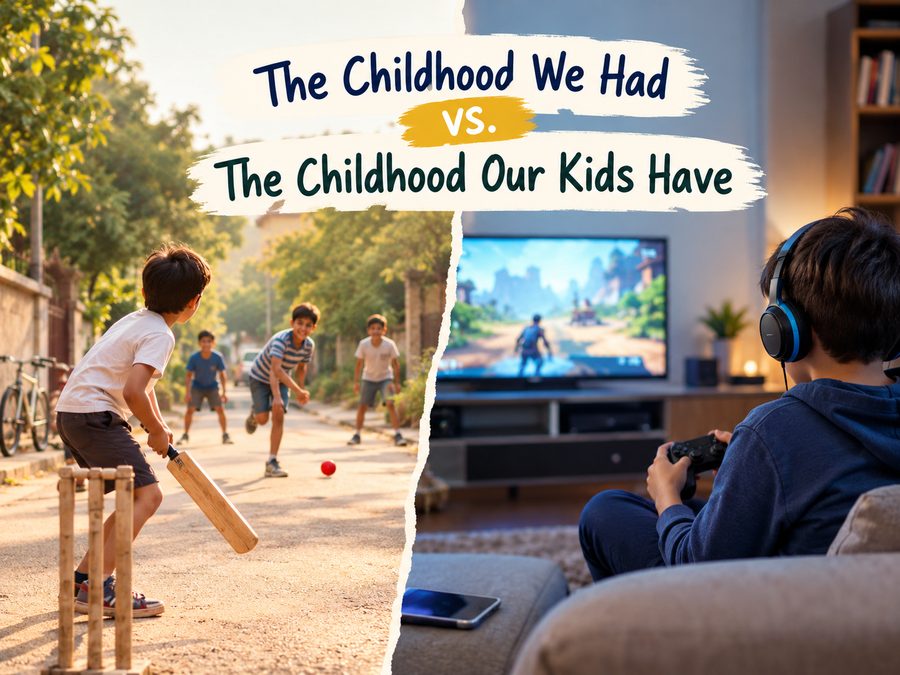
For many parents, childhood meant:
- Playing outside until sunset
- Knocking on a friend's door
- Sharing one television with the family
- Waiting days to develop photos
- Living mostly offline
For Gen Z?
Life is happening online and offline at the same time.
Their friendships are there.
Their reputation is there.
Their confidence is there.
Their social status is there.
Sometimes, unfortunately, their anxiety is there too.
Imagine waking up every morning and instantly seeing hundreds of people who seem smarter, happier, richer, more attractive, more successful, and more popular than you.
Even adults struggle with that.
Now imagine navigating it at fifteen.
The Truth Parents Need to Hear
Most teenagers are not giving their parents a hard time.
They are having a hard time.
Let that sink in.
Many parents see:
- Attitude
- Silence
- Resistance
- Laziness
- Irritability
But underneath, there may be:
- Stress
- Anxiety
- Fear
- Loneliness
- Low self-esteem
- Academic pressure
Teenagers don't always know how to explain what they're feeling.
Many adults struggle with emotions too.
How can we expect a sixteen-year-old to do it perfectly?
A Story That Happens in Thousands of Homes
A mother once shared a story during a parenting workshop.
She was frustrated with her daughter.
Every evening ended in arguments.
"Put your phone away."
"Clean your room."
"Why are your grades dropping?"
"Why are you always upset?"
Nothing seemed to work.
The relationship became tense.
One evening, after another argument, her daughter suddenly burst into tears.
Not the dramatic crying parents sometimes see.
The kind of crying that comes from holding too much inside for too long.
Through tears she said:
"Mom, I wake up every day feeling like I'm not good enough."
The mother was stunned.
She thought the problem was phone addiction.
The real problem was self-worth.
While her mother was fighting the behavior, her daughter was fighting an emotional battle nobody could see.
That conversation changed everything.
Not because all the problems disappeared.
But because understanding finally entered the room.
Teenagers Today Are Carrying Invisible Weight
Many Gen Z teenagers look perfectly fine from the outside.
They smile.
They attend school.
They post photos.
They joke with friends.
But many carry burdens silently.
Pressure to perform.
Pressure to fit in.
Pressure to look perfect.
Pressure to succeed.
Pressure to know what they want to do with their lives before they've even figured out who they are.
A seventeen-year-old once described it perfectly:
"It feels like everyone expects me to have my entire future planned while I'm still trying to understand myself."
And honestly, that's a fair point.
Social Media Is Not the Enemy. But It Is Powerful.
Parents often ask:
"Should I ban social media completely?"
The reality is rarely that simple.
Social media isn't entirely good.
It isn't entirely bad.
It's powerful.
And anything powerful needs guidance.
For many teenagers, social media provides:
- Creativity
- Learning opportunities
- Friendships
- Communities
- Inspiration
But it also creates unrealistic comparisons.
Here's the problem.
Teenagers are comparing their real lives to everyone else's highlight reels.
They see:
- Perfect vacations
- Perfect bodies
- Perfect relationships
- Perfect achievements
What they don't see:
- Anxiety attacks
- Family struggles
- Rejections
- Failures
- Loneliness
The result?
Many teenagers start believing everyone else is living a better life than they are.
Why Teenagers Stop Talking
This is perhaps the biggest heartbreak for parents.
Many parents tell me:
"My child doesn't talk to me anymore."
But teenagers rarely stop talking overnight.
Usually it happens slowly.
One conversation at a time.
Consider these examples:
Teenager:
"I'm stressed."
Parent:
"Wait until you have real responsibilities."
Conversation ends.
Teenager:
"I had a terrible day."
Parent:
"That's life. You'll survive."
Conversation ends.
Teenager:
"I'm struggling."
Parent:
"You're overreacting."
Conversation ends.
After enough experiences like this, many teenagers stop sharing.
Not because they don't need their parents.
Because they don't feel understood.
Sometimes Your Child Doesn't Need a Solution
This might be one of the hardest lessons for parents.
We love our children.
When they're hurting, we want to fix it.
Immediately.
But teenagers often need something different.
They need someone who listens before offering answers.
Imagine your teenager says:
"Nobody likes me."
A parent might respond:
"That's ridiculous. Of course people like you."
The intention is good.
But a more powerful response might be:
"What happened that made you feel that way?"
One response dismisses the feeling.
The other explores it.
And teenagers desperately need adults who are willing to sit with their feelings rather than solve them immediately.
The Hidden Fear Behind Every Parent
Let's be honest.
Parents have fears too.
Sometimes when a child struggles, parents secretly wonder:
"Did I fail?"
"Could I have done something differently?"
"Am I losing my child?"
These questions keep many parents awake at night.
But here's something important:
Good parenting isn't raising a child who never struggles.
Good parenting is raising a child who knows where to turn when they do.
Read that again.
That's the goal.
Not perfection.
Connection.
What Gen Z Wants Most From Parents
Surprisingly, the answer is simple.
Teenagers want many of the same things people have always wanted.
They want to feel:
Seen
Not just for their grades.
Not just for their achievements.
For who they are.
Heard
Without interruption.
Without judgment.
Without a lecture waiting at the end.
Trusted
Even while they're still learning.
Even while they make mistakes.
Accepted
Not only when they're successful.
Not only when they're easy to parent.
But exactly as they are.
Loved
Especially on their worst days.
The Small Moments That Change Everything
Many parents believe great parenting happens during major life events.
Graduations.
Achievements.
Celebrations.
Actually, relationships are often built in ordinary moments.
A late-night conversation in the kitchen.
A car ride home from school.
A walk after dinner.
A text message saying:
"Just checking on you. Hope you're okay."
Small moments create emotional safety.
And emotional safety creates trust.
One Conversation Every Teenager Needs
Imagine coming home after the worst day of your life.
You failed an exam.
Friends betrayed you.
Your confidence is shattered.
Now imagine hearing these words:
"You don't have to earn my love."
Powerful, isn't it?
Every teenager needs to know that their worth is not attached to:
- Marks
- Trophies
- Popularity
- University admissions
- Social media followers
Their worth comes from who they are.
Not what they've achieved.
The Parent-Teen Relationship Is Not a Battle
Unfortunately, many families accidentally turn parenting into a power struggle.
Parents push.
Teenagers resist.
Parents push harder.
Teenagers retreat further.
Nobody wins.
The strongest parent-child relationships aren't built on control.
They're built on influence.
And influence comes from connection.
Teenagers listen most to people who make them feel understood.
A Letter to Every Parent Reading This
Dear Parent,
Your teenager may not always show appreciation.
They may roll their eyes.
They may challenge your opinions.
They may act like they don't need you.
But they do.
More than you know.
Behind all the independence, there is still a child trying to figure out life.
A child trying to understand themselves.
A child wondering whether they are enough.
And while the world continues telling them who they should become, they need one place where they are already accepted.
That place is home.
You don't need perfect words.
You don't need perfect answers.
You don't need perfect parenting.
You just need to keep showing up.
Keep listening.
Keep loving.
Keep believing in them, especially when they don't believe in themselves.
One day your teenager will become an adult.
And they may forget many of the rules.
They may forget many of the lectures.
But they will never forget how you made them feel.
Make sure they remember feeling loved.
Final Thoughts: The Real Secret of Parenting Gen Z
The challenge of raising Gen Z isn't technology.
It isn't social media.
It isn't attitude.
It isn't generational differences.
The real challenge is maintaining a human connection in a world full of distractions.
Your teenager doesn't need a perfect parent.
They need a present parent.
Someone who listens.
Someone who understands.
Someone who stays.
Because beneath the headphones, the screen time, the silence, the mood swings, and the independence is a simple truth:
Every teenager is still asking the same question they asked as a child:
"When I mess up, when I struggle, when I'm confused, when I'm not my best... will you still be there for me?"
And the most powerful answer a parent can give is:
"Always. No matter what."